Pelvic Floor Strong Review?

What is Pelvic Floor Strong?
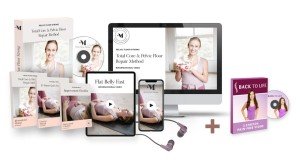
Pelvic Floor Strong is a digital exercise program aimed primarily at women who are experiencing pelvic-floor weakness, bladder leakage, urinary incontinence or related core/abdominal issues. It presents itself not as a medical cure, but as a home-training system to strengthen pelvic-floor muscles, improve core and posture, and reduce or manage leakage. According to promotional material, it includes video tutorials, guidance, exercises, tools for progress tracking, and educational content about pelvic health. YouTube+2Scribehow+2
The program claims to be suitable for women of various ages (especially over 40) and those who may have had pregnancies, abdominal separation (diastasis recti), back pain, or leakage issues. Scribehow+1
What the program promises & how it works
Promises
- Reduced bladder leaks or urgency, improved bladder control. Scribehow+1
- Stronger core, reduced abdominal separation/diastasis, better posture and possibly fewer back issues. Santé log+1
- Convenience: train at home, no need for expensive equipment or surgeries. New Pelican
How it works
- The program uses guided videos and exercise sequences specially targeting the pelvic-floor muscles, as well as core/upper-body/posture muscles that are functionally linked to pelvic-floor health. YouTube+1
- It emphasises consistency and proper form (i.e., correct activation of pelvic-floor rather than just generic abdominal or glute work).
- It also provides educational modules on how the pelvic floor works, how it can be weakened (pregnancy, age, heavy lifting, posture issues) and what lifestyle factors affect it.
- It is delivered digitally (video + downloadable resources) and often includes some “tracking” or “progress monitoring” aspects. Scribehow
What the independent evidence & user-feedback tell us
Evidence from clinical research (context)
- There is a substantial body of research showing that pelvic-floor muscle training (PFMT) (e.g., Kegel exercises) is effective in reducing urinary incontinence episodes, improving muscle strength and quality of life in women with pelvic-floor weakness. PMC+2Lippincott Journals+2
- For example, a review found interventions improved urinary incontinence symptoms and muscle strength — particularly when supervised or with biofeedback. Lippincott Journals
- Another found that Kegel exercises help prevent leaking, strengthen bladder/bowel control and support pelvic organs. Cleveland Clinic
This means: the general principle of “training your pelvic-floor muscles” does have good scientific backing. What is less clear is whether this specific program (Pelvic Floor Strong) has independent published clinical trials verifying its own protocol.
What users are saying
Positive feedback:
- Many users report improvements: e.g., “The exercises are simple to follow, and I’ve noticed a huge improvement in my core strength.” Santé log
- Testimonials claim resolution of leakage issues, reduction in back pain, improved posture and confidence. Scribehow
- Some reviewers label it as “one of the best pelvic-floor exercise programs available today.” Yahoo Finance
Critical feedback / warning signs:
- The business listing on the Better Business Bureau (BBB) shows complaints: e.g., users claim they were charged beyond what was advertised or that the infomercial felt “bait and switch”. Better Business Bureau
- Some information suggests that results depend heavily on consistency, correct form, and users’ initial condition; and that if those aren’t optimal, benefits may be modest. Scribehow
- Because the program is digital and self-guided rather than clinician-supervised, some of the benefits seen in supervised PFMT may be lessened (based on research) Lippincott Journals
Pros & Cons
Pros
- Uses a scientifically backed approach (pelvic-floor training) which increases the likelihood of genuine benefit.
- Makes training accessible at home (no special equipment needed beyond perhaps some floor space).
- Good for conditions often under-addressed (pelvic floor weakness, postpartum core issues, mild leakage) and may restore confidence and functionality.
- Includes educational material, which helps users understand why it’s working—not just what to do.
- Flexible: can fit into busy schedules if the user is disciplined.
Cons / caveats
- Being digital/self-guided means you may miss correct form or muscle activation errors; supervised training tends to deliver better results. Lippincott Journals
- The program’s marketing might oversell dramatic results (“leakage completely gone in weeks”) which may not apply to everyone.
- Some complaints about business practices: e.g., unexpected billing, “infomercial-style” marketing that raises credibility questions. Better Business Bureau+1
- It may require significant time commitment and good consistency; if you do it sporadically, benefits may be limited.
- Not a substitute for medical intervention: if you have major pelvic-organ prolapse, serious incontinence, or neurological issues, training alone may not suffice.
Who is it right for (and who isn’t)
Good fit
- Women who have mild to moderate pelvic-floor weakness (post-pregnancy, new onset of leakage, mild core separation) rather than severe pathology.
- Women motivated to follow a training program at home, willing to commit time and do proper form.
- People looking for a non-invasive, conservative approach before seeking surgery or heavy medical intervention.
- People who understand this is a “support & training” tool and not a miracle fix.
Less good fit
- Individuals with severe pelvic-organ prolapse, significant neurologic damage, or major incontinence—who likely need medical/surgical consultation.
- Users who are unlikely to follow through with consistent training.
- People who expect instant dramatic results without effort.
- Situations where accurate diagnosis or supervised physical therapy is critical (e.g., post-surgery, postpartum complications) — this program might complement but not replace professional care.
Verdict
Pelvic Floor Strong is a legitimate and potentially helpful program for pelvic-floor strengthening, especially for women who are motivated, consistent, and have mild-to-moderate pelvic-floor issues. It aligns with evidence that pelvic-floor muscle training works, and user feedback is largely positive (with the caveats around marketing).
However, it’s important to manage expectations:
- It won’t guarantee “no leakage” for everyone or fix every case of pelvic-floor dysfunction overnight.
- Its success depends strongly on user consistency, correct activation of muscles, and appropriate lifestyle (hydration, posture, core strength, avoiding high stress on pelvic floor).
- It may be best used as one part of a broader approach (which could include pelvic-floor physiotherapy, medical review, weight management, bladder-training) rather than the sole solution.
If I had to give a simple rating:
- Effectiveness (for suitable user + full commitment): ★★★★☆
- Ease of use and accessibility: ★★★★☆
- Risk/cost-value ratio: ★★★★☆ (assuming you pay reasonable price, read refund policy).
- Marketing/credibility caution: ★★★☆☆ (because of some complaints and heavy promotion).
My Recommendations if You Try It
- Before starting, consider seeing a pelvic-floor physiotherapist to assess your baseline muscle activation and form—so you start the program correctly.
- Be consistent: schedule short sessions (e.g., 10-15 minutes daily) and stick with it for at least 8-12 weeks to assess real change (research shows meaningful improvements often take this long). PMC+1
- Combine with lifestyle supports: ensure proper posture, reduce heavy impactful exercise if leaking worsens, stay hydrated, maintain healthy weight, avoid excessive lifting or straining. nhs.uk+1
- Monitor progress (leakage frequency, urgency, core strength, back pain) so you have a benchmark.
- If you’re not seeing progress after, say, 3-4 months, don’t keep hoping blindly — either reach out for more advanced therapy or review your form and adherence.
- Read the refund policy carefully before purchase (some users report unexpected charges).
About The Author